9.1. ASCII Codes
The standard ASCII table defines 128 character codes (from 0 to 127), of which, the first 32 are control codes (non-printable), and the remaining 96 character codes are printable characters. Figure 9.1 shows the hexadecimal values of the ASCII character codes, e.g. the ASCII code for the capital letter “A” is equal to 0x41:
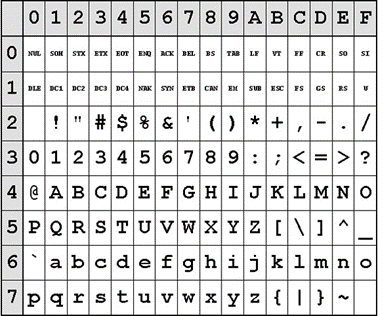
Figure 9.1 The Standard ASCII Table
In addition to the 128 standard ASCII codes (the ones listed above ranging from 0 to 127), most systems have another 128 extra codes which form what is known as extended ASCII (with ranges from 128 to 255). The OEM Extended ASCII character set is included in all PC-compatible computers as the default character set when the system boots before loading any operating system and under MS-DOS. It includes some foreign signs, some marked characters and also pieces to draw simple panels. Figure 9.2 shows the hexadecimal values of the OEM Extended ASCII character codes, e.g. the ASCII code for the capital letter “Æ” is equal to 0x92:
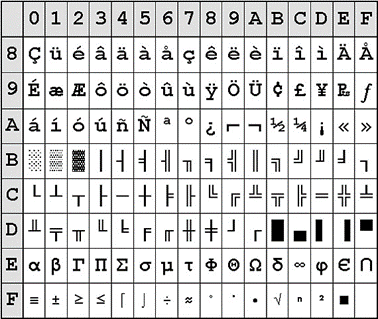
Figure 9.2 OEM Extended ASCII Table
Below are listed codes for players, radios etc. as an alternative to the OEM Extended ASCII codes. Undefined values MUST be ignored.
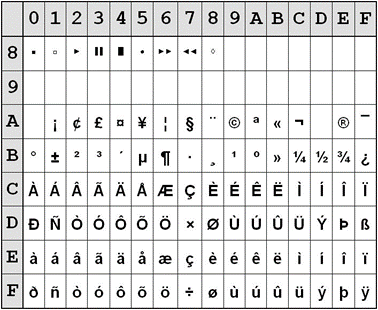
Figure 9.3 Players Table